Many garment factories face the same problems every day: slow sewing, uneven stitches, and too much rework. These issues waste time, fabric, and money.
An automatic industrial sewing machine solves this by doing many tasks on its own. An auto machine controls speed, stitching, and cutting automatically, giving clean and accurate results every time. This is the power of industrial automation sewing.
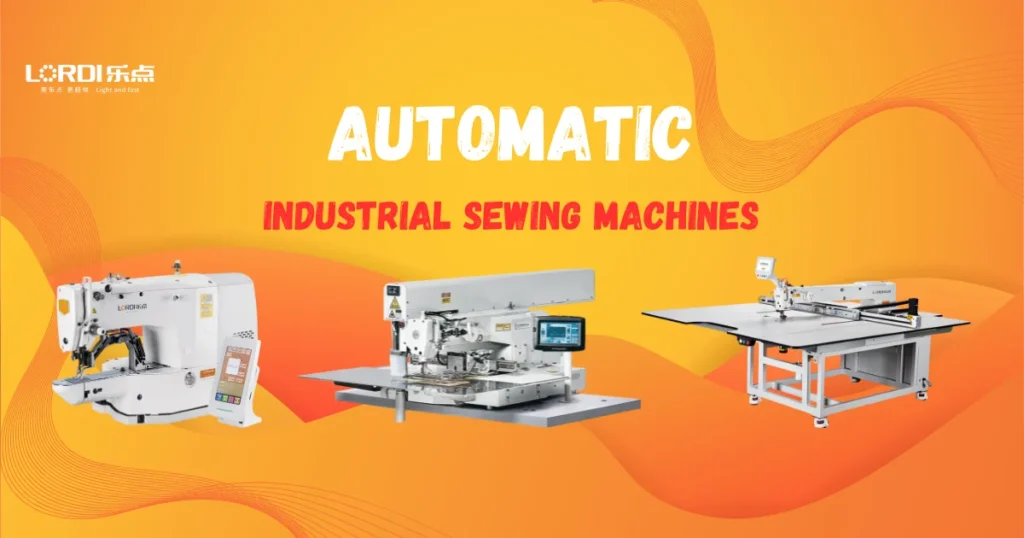
LORDI leads this smart change. Its IoT-based machines can be controlled through a mobile app, helping factories work faster, reduce mistakes, and produce consistent quality with less effort.
2. What Is an Automatic Industrial Sewing Machine?
An automatic industrial sewing machine is a smart sewing machine made for factories that need speed and accuracy. Unlike regular machines, it does many tasks by itself with very little manual effort.
A normal industrial machine needs the operator to control cutting, stopping, and lifting by hand. An automatic sewing machine does this automatically. For example, it cuts thread on its own, locks stitches at the start and end, and lifts the presser foot without stopping the work.
This automation saves time on every stitch. When small actions are automated, production becomes faster and stitching quality stays the same on every garment.
That is why factories choose automatic machines — they work faster, make fewer mistakes, and deliver clean, professional results at high speed.
3. How Automation Improves Sewing Speed
Slow machines are a big problem in garment factories. Manual work, stopping again and again, and operator fatigue reduce daily output.
A high speed sewing machine with automation removes these delays. An automatic sewing machine cuts thread, locks stitches, and lifts the presser foot on its own. The operator does not stop or wait — the machine keeps moving.
This saves seconds on every piece. In mass production, saving seconds means producing hundreds of extra garments every day.
Automation also keeps speed stable. IoT and mobile controls let managers set the right speed for each fabric and style. This prevents over-speeding, reduces mistakes, and keeps production smooth.
With automation, factories sew faster, smarter, and with full control — not stress.
4. How Automation Improves Accuracy and Stitch Quality
Uneven stitches and sewing mistakes cost factories time and fabric. When stitching is not consistent, garments need rework or get rejected.
An automatic industrial sewing machine solves this with smart control. It keeps thread tension balanced, guides stitches evenly, and adjusts automatically when fabric changes. Sensors help the machine stay accurate at high speed.
This is the real power of industrial automation sewing. Every garment looks the same, from the first piece to the last. Fewer defects mean less waste and better quality.
With IoT features, technicians can monitor stitching accuracy through mobile dashboards. Problems are spotted early, settings are adjusted quickly, and production stays smooth.
Automation brings clean stitching, stable quality, and confidence in every order.
5. How Automation Improves Efficiency and Reduces Human Errors
Manual sewing depends too much on human action. Small mistakes like late cutting, wrong tension, or fabric misalignment slow down work and increase labor cost.
An auto machine reduces these problems by doing key tasks automatically. Features like auto thread trimming, fabric alignment sensors, automatic presser foot control, and auto tension setting remove guesswork from sewing.
This means operators work with less pressure and make fewer mistakes. Production flows smoothly, and fewer workers are needed to manage the same output.
With industrial automation sewing, efficiency is not only on the machine. LORDI’s mobile app allows managers to check machine status, performance, and alerts in real time. Problems are fixed early, before they cause downtime.
Automation saves time, lowers costs, and keeps factories running clean and organized.
6. Key Features to Look for in an Automatic Industrial Sewing Machine
When you’re about to buy an automatic industrial sewing machine, check these features first. They fix real problems and keep production steady.
1) Automatic thread trimming
Pain: cutting thread by hand slows work and creates loose ends.
Benefit: trims thread instantly after each stitch, so operators move to the next piece faster and cleaner.
2) Auto back‑tacking
Pain: weak or loose stitch ends cause seams to open.
Benefit: locks stitches automatically at the start and end, giving stronger seams without extra steps.
3) Auto presser foot lift
Pain: lifting the foot by hand wastes time and can disturb fabric position.
Benefit: lifts the foot automatically, letting the operator load the next piece quickly and precisely.
4) Adjustable speed control
Pain: same high speed for every fabric causes errors or damage.
Benefit: lets you choose the right speed for different fabric types, reducing mistakes and fabric waste.
5) IoT remote monitoring
Pain: machines break or perform poorly without warning, causing downtime.
Benefit: smart systems let managers see machine status, production data, or alerts from a mobile device. Some industry systems say this can cut data work and help monitor real-time output, raising productivity without large costs.
[LORDI-style smart control] keeps operators and managers informed, not guessing.
6) Compatible spare parts availability
Pain: hard-to-find parts make a good machine useless when it breaks.
Benefit: easy access to parts means fast repairs, lower downtime, and less money wasted on emergency solutions.
7) User-friendly interface
Pain: complex controls confuse operators and lead to mistakes.
Benefit: simple screens or buttons help new staff learn quickly and work correctly on the first day.
Why these features matter
Together, they make an automatic sewing machine more than just fast — they make it reliable, clean, and able to keep working with fewer errors. This is what real factories need: smart machines that save time, reduce waste, and cut costs, not just more power.
If you check for these features, you’re much more likely to buy a machine that works well today and keeps working for years.
7. Where Automatic Industrial Sewing Machines Are Used
An automatic industrial sewing machine is used wherever speed, quality, and consistency matter most.
Large Garment Factories
Big factories use automation to handle bulk orders. Automatic machines keep stitching fast and even across long production shifts, helping factories meet tight deadlines.
Export Houses
Export units cannot afford mistakes. Automation ensures the same stitch quality on every garment, which is critical for international buyers and quality checks.
High-Volume Workshops
Workshops producing large quantities of similar garments use automatic machines to reduce labor pressure and increase daily output without hiring extra workers.
Specialized Production Units
Some units focus on specific items like shirts, trousers, denim, or heavy fabrics. Automation adjusts easily to these needs, keeping stitches strong and clean even on thick or layered materials.
Different Production Lines
With industrial automation sewing, machines fit smoothly into cutting, stitching, and finishing lines. Settings can be adjusted quickly, and production stays balanced from start to finish.
Automatic machines help businesses of all sizes work faster, smarter, and with fewer errors — no matter the production scale.
8. Common Problems Buyers Face (And How Automation Solves Them)
Many factories want to upgrade, but they face daily problems that slow growth. A modern automatic sewing machine is designed to solve these issues clearly and practically.
Problem: Machine Downtime and Slow Output
Old machines stop often and slow the whole line.
Solution: Automatic features and smart alerts keep machines running smoothly. Issues are detected early, reducing downtime and keeping production fast.
Problem: Inconsistent Stitching
Uneven stitches lead to rejected garments and rework.
Solution: Auto sensors and stable speed control keep stitching consistent. A high speed sewing machine with automation maintains quality even at full speed.
Problem: High Labor Cost
Too many manual steps increase labor needs and fatigue.
Solution: Auto functions reduce manual work. One operator can produce more with less effort, lowering overall labor cost.
Problem: Hard to Control Production Flow
Managers struggle to track performance and delays.
Solution: Mobile apps and IoT monitoring provide real-time control. Speed, output, and machine status are easy to manage from one place.
Automation turns common factory problems into controllable systems, helping businesses grow with confidence.
9. Why LORDI Automatic Industrial Sewing Machines Are a Smart Choice
Many buyers worry about buying a smart industrial sewing machine because they want:
- solid performance
- good quality
- affordable price
- and support when needed
This is where LORDI automatic industrial sewing machines stand out.
Trusted Manufacturer with Global Reach
LORDI is a real Chinese manufacturer with experience serving garment factories in many countries. This means LORDI machines are tested in real production lines, not just sold as cheap imports. They help factories improve daily output and meet export quality standards.
Strong Export Partnerships
LORDI works with partners all over the world, helping clothing makers grow and export more. This shows that customers trust LORDI machines in high-demand production environments.
Competitive Price + Advanced Technology
LORDI machines are priced competitively but offer advanced features usually found in much more expensive machines. This gives businesses more value for their money without sacrificing performance.
IoT Mobile App Control for All Features
One of the biggest advantages is smart connectivity. LORDI industrial sewing machines can be controlled and monitored through a mobile application. Factory managers and technicians can:
- check machine status
- monitor stitching performance
- adjust speed and settings
all right from their phone.
This modern approach makes production smarter, not harder.
Complete Factory Solutions
LORDI doesn’t just sell a machine — it offers complete production solutions. Whether you need automatic thread trimming, auto back-tack, or smart monitoring, LORDI machines work together smoothly as part of your factory line.
After-Sales Support and Spare Parts
Many buyers worry about spare parts and machine support. LORDI offers after-sales service and parts availability, which keeps machines running and reduces downtime. This kind of support is crucial for consistent garment production.
In simple terms: LORDI automatic industrial sewing machines give you the power of automation, smart control, global trust, and real support — all at a price that helps your business grow.
10. Conclusion and Call to Action
An automatic industrial sewing machine helps garment businesses work faster, stitch better, and waste less. With automation, factories get higher speed, stable quality, and fewer human errors every day.
A smart automatic sewing machine improves output without increasing stress on workers. It keeps production smooth, reduces rework, and helps businesses meet deadlines with confidence.
If you want to upgrade your factory, reduce costs, or plan a modern production line, now is the right time.
- Contact us today
- Request a customized quote
- Discuss your factory requirements with our experts
Take the next step toward smarter, faster, and more profitable garment production with LORDI.