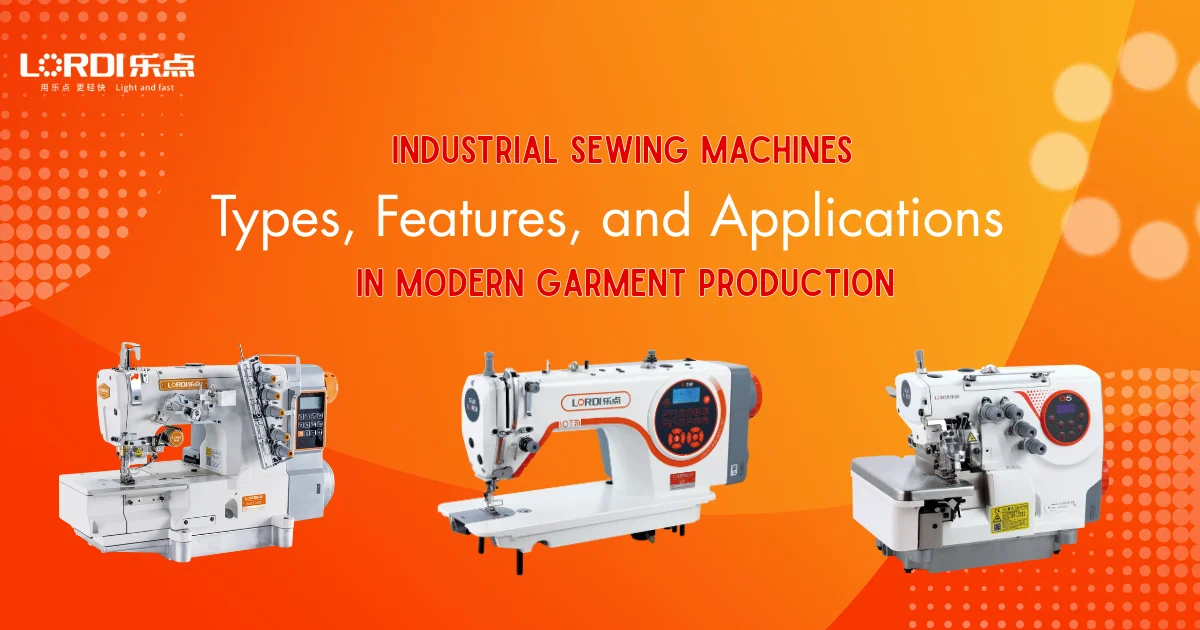
Industrial sewing machines are special sewing machines made for factories and professional work. They are built to sew clothes fast, strong, and for many hours without stopping. People also call them a stitching machine, silai machine, or salai machine, but industrial sewing machines are much more powerful than normal home sewing machines.
The main difference between industrial sewing machines and home sewing machines is speed, power, and purpose. A home sewing machine is made for small tasks, like fixing clothes or sewing once in a while. An industrial sewing machine is made to work all day in busy places like garment factories and tailoring units. It can sew thousands of stitches in one minute, handle thick fabric, and keep working without overheating.
Garment factories use industrial sewing machines because they help produce clothes faster and with better quality. These machines make strong and even stitches, which is very important when making shirts, trousers, uniforms, and other garments in large numbers. With the right industrial stitching machine, factories save time, reduce mistakes, and meet big production targets easily.
This is why industrial sewing machines play a very important role in modern garment production and professional tailoring work.
2. What Is an Industrial Sewing Machine?
In real garment production, industrial sewing machines are not used alone — they work as part of a complete production system. Each machine is placed in a specific step of the sewing line, where speed, accuracy, and consistency are very important. This is why factories choose factory sewing machines instead of regular sewing machines.
A key problem many new factory owners face is choosing a machine that cannot handle long working hours. Industrial sewing machines are built for continuous duty, which means they are designed to run for many hours every day without stopping. This makes them reliable garment production machines for large and small factories.
Another issue is production delay caused by weak stitching or machine vibration. Industrial stitching machines have strong frames and balanced motors that keep the machine stable at high speed. This helps maintain uniform stitch quality, even when thousands of garments are produced daily.
For tailoring units and growing factories, using the right industrial sewing machine means:
- fewer breakdowns
- less fabric damage
- faster order completion
In simple terms, industrial sewing machines are production tools, not just sewing tools. They are designed to support real factory work where time, quality, and output matter the most.
3. Types of Industrial Sewing Machines
One of the biggest problems factory owners and tailoring units face is choosing the wrong machine. Many people buy a sewing machine without knowing its exact use, and later they face slow work, fabric damage, or low production. Understanding the types of industrial sewing machines helps you choose the right machine for the right job and avoid costly mistakes.
Modern manufacturers like LORDI Industrial Sewing Machines focus on complete solutions. Their machines are designed for real factory needs, offer advanced technology, and even include IoT-based features that can be controlled through a mobile application. This makes production easier, smarter, and more controlled.
3.1 Lockstitch Machines
Lockstitch machines are the most widely used industrial sewing machines in garment factories. Almost every production line uses them.
These machines make straight and strong stitches, which are perfect for sewing shirts, pants, uniforms, and daily wear clothing. If a factory needs clean and neat stitching at high speed, a lockstitch stitching machine is usually the first choice.
3.2 Overlock (Serger) Machines
An overlock machine is used to finish fabric edges and stop them from coming apart. This is very important in modern garment production, especially for knitwear and t-shirts.
Overlock machines cut, stitch, and finish the fabric edge in one step. This makes production faster and gives clothes a clean and professional look. That is why they are key garment production machines in export factories.
3.3 Walking Foot Machines
Walking foot machines are used when working with thick or multiple fabric layers, such as denim, leather, or heavy uniforms.
These machines help move the top and bottom fabric layers together. This prevents slipping and uneven stitching, which is a common problem with thick materials.
3.4 Flatbed Machines
Flatbed machines are the most flexible type of industrial sewing machines. They are used for general sewing work and are suitable for many fabric types.
Because of their simple design and wide use, flatbed machines are found in both garment factories and professional tailoring units. They are often called a reliable silai machine for everyday production needs.
3.5 Cylinder-Bed Machines
Cylinder-bed machines are designed for sewing round or hard-to-reach areas, such as sleeves, cuffs, pant legs, and bags.
Their unique shape allows easy fabric movement where flat machines cannot work properly. These machines are commonly used in advanced garment units.
Why Choosing the Right Type Matters
Each type of industrial sewing machine has a specific role in production. Choosing the correct one:
- improves stitching quality
- increases production speed
- reduces fabric waste
- lowers machine breakdowns
Advanced manufacturers like LORDI combine these machine types with smart technology and IoT control, allowing factories to monitor performance, adjust settings, and improve efficiency through mobile apps.
Understanding machine types helps you build a strong, efficient, and future-ready production setup.
4. Features That Make Industrial Sewing Machines Powerful
Many buyers ask one simple question: Why do industrial sewing machines cost more than normal sewing machines?
The answer is in their features. These machines are made to work harder, faster, and longer. For factories, using weak machines causes delays, poor stitching, and high repair costs. Advanced industrial machines solve these problems.
Manufacturers like LORDI Industrial Sewing Machines focus on smart design, strong parts, and modern technology. Their machines are built as complete production solutions, not just sewing tools. With iOT-based control, many features can be monitored and adjusted through a mobile application, which helps factories manage work easily.
Below are the key features that make industrial machines powerful and reliable.
4.1 High Speed Performance
Industrial sewing machines are designed to sew very fast. They can make thousands of stitches per minute without losing quality. This high speed helps factory sewing machines produce more garments in less time.
For garment factories, slow machines mean missed deadlines and late orders. High-speed industrial stitching machines solve this problem by keeping production smooth and continuous.
Why it matters:
Faster speed = more clothes made = better factory output.
4.2 Durable Build Quality
Industrial machines are built with strong metal frames and heavy-duty parts. Unlike light home machines, they do not shake or break easily.
Factories often run machines for long shifts, sometimes all day. Durable build quality allows these machines to handle long working hours without damage. This is one of the main reasons industrial machines last for many years.
Why it matters:
Weak machines fail quickly. Strong machines reduce repair costs and downtime.
4.3 Powerful Motor System
Another important feature is the motor power. Industrial sewing machines use powerful motors that help sew thick fabrics like denim, uniforms, and layered garments.
These motors are designed to stay cool, even during long hours of work. This prevents overheating, which is a common issue with low-quality machines.
With modern LORDI machines, motor performance can also be monitored using smart control systems, helping factories maintain steady production.
Why it matters:
A strong motor means smooth stitching and fewer production stops.
4.4 Specialized Machine Functions
Industrial sewing machines are often designed for specific jobs. Some machines are best for straight stitching, while others are made for hemming, edge finishing, or decorative work.
Using a machine that is made for one task improves stitch quality and saves time. This is why professional garment production machines are used in organized production lines instead of one machine for all jobs.
Why it matters:
The right machine for the right job improves quality and reduces fabric waste.
Why These Features Matter for Factories
Industrial sewing machines cost more because they offer:
- faster production
- longer machine life
- better stitch quality
- lower long-term maintenance cost
Advanced brands like LORDI combine these features with smart technology and competitive pricing, making industrial sewing machines a strong investment for modern garment production.
5. How Industrial Sewing Machines Are Used in Garment Production
Many people understand what industrial sewing machines are, but they still ask:
“How are these machines actually used in real factories and tailoring businesses?”
This section explains their real working role, not just theory.
Modern garment production depends on speed, accuracy, and planning. That is why factories and workshops use factory sewing machines as part of a complete system. Advanced manufacturers like LORDI design machines that fit smoothly into real production setups, with smart controls and IoT features that help managers track and control work through a mobile app.
5.1 Mass Production Lines in Garment Factories
In large garment factories, industrial sewing machines are placed in production lines. Each machine performs a specific task, such as straight stitching, edge finishing, or attaching parts.
These garment production machines are used to make:
- shirts
- trousers
- uniforms
- export-quality garments
A common pain point in factories is slow output and stitching errors. Industrial machines solve this by working at high speed while keeping stitches clean and even. With advanced control systems, factory managers can also monitor machine performance and reduce downtime.
Why it works:
Fast machines + organized production lines = higher output and better quality.
5.2 Use in Tailor Shops and Small Units
Industrial sewing machines are not only for big factories. Many tailor shop machines and small production units also use them to meet customer demand.
Tailors who handle bulk orders often struggle with:
- slow home machines
- frequent breakdowns
- uneven stitching
Industrial machines help them produce many outfits in less time without losing quality. Flatbed and lockstitch machines are especially popular in tailoring units because they are easy to use and very reliable.
Smart features in modern machines, like those from LORDI, also help small businesses grow by offering factory-level performance at competitive prices.
Why it works:
Better machines help small workshops compete with larger producers.
Real Business Value of Industrial Sewing Machines
Whether used in a big factory or a small tailoring unit, industrial sewing machines:
- increase daily production
- improve stitch quality
- reduce fabric waste
- support long working hours
This is why they are a key part of modern garment manufacturing and professional tailoring businesses.
6. Why Choose Industrial Sewing Machines Over Home Machines
Many people who run small workshops or growing garment businesses face the same problem:
home sewing machines are slow, break often, and cannot handle large orders. This is the point where upgrading becomes necessary.
Choosing industrial sewing machines over home machines is not about luxury — it is about production, quality, and business growth. Below are the key reasons explained in simple words.
Faster Speed and Higher Output
Home sewing machines are made for occasional use. When used for long hours, they slow down or stop working. Industrial sewing machines, on the other hand, are built for continuous production.
A single industrial stitching machine can do the work of multiple home machines. This helps factories and workshops complete large orders on time and meet export deadlines.
Business benefit:
More speed means more garments produced every day.
Stronger and More Reliable Stitches
Another common problem with home machines is weak stitching. When fabric is thick or layered, stitches can break or look uneven.
Industrial sewing machines create strong and consistent stitches, even at high speed. This improves garment quality and reduces customer complaints.
Business benefit:
Strong stitches mean fewer returns and better product reputation.
Better Handling of Heavy and Tough Fabrics
Home machines struggle with materials like denim, uniforms, and multi-layer garments. This causes skipped stitches and fabric damage.
Industrial sewing machines are designed to handle heavy fabrics easily. Their powerful motors and stable structure allow smooth sewing without stopping.
Business benefit:
No fabric damage, no wasted material.
Made for Long Working Hours
One of the biggest differences is working time. Home machines overheat when used all day. Industrial machines are made to run for long shifts without breaking down.
Modern machines from manufacturers like LORDI also include smart monitoring features. With IoT-based systems, machine performance can be checked through a mobile app, helping businesses avoid sudden breakdowns.
Business benefit:
Less downtime and lower maintenance cost.
The Smart Upgrade for Growing Businesses
For anyone moving from small orders to bulk production, industrial sewing machines are the smart and safe upgrade. They support faster work, better quality, and long-term reliability.
Brands like LORDI offer advanced technology, competitive pricing, and complete sewing solutions, making it easier for businesses to grow without stress.
7. Tips to Pick the Right Industrial Sewing Machine
Buying an industrial sewing machine is a big decision, especially for new factories and growing tailoring businesses. A common mistake many buyers make is choosing a machine only by price, which later causes slow work, frequent repairs, and poor stitching quality. The right choice saves time, money, and stress.
Below are simple and practical tips to help you choose the right industrial sewing machines for your production needs.
Know What Clothes You Make
The first step is to understand what type of garments you produce. Different clothes need different machines.
- Light fabrics like shirts need standard stitching machines
- Knitwear needs overlock machines
- Heavy fabrics like denim or uniforms need stronger machines
Choosing the right machine for your garment type improves stitching quality and avoids fabric damage. This is why professional garment production machines are selected based on actual production needs, not guesswork.
Solution:
Match the machine to your fabric and garment type.
Decide How Fast You Want to Work
Production speed is very important in modern garment businesses. If your orders are increasing, a slow machine will hold you back.
Industrial sewing machines are designed for high-speed work. Advanced models, like those offered by LORDI, allow speed control and performance monitoring through smart systems. This helps factories balance speed and quality using mobile-based control.
Solution:
Choose a machine that supports your current workload and future growth.
Ask About Maintenance and Spare Parts
Another pain point many buyers face is machine downtime due to missing spare parts or complex repairs. Even a good machine becomes useless if parts are not easily available.
Reliable manufacturers provide:
- easy maintenance
- long-lasting parts
- technical support
LORDI focuses on complete solutions, offering durable machines with accessible parts and smart monitoring that helps prevent unexpected breakdowns.
Solution:
Always check service support and spare part availability before buying.
Think Long-Term, Not Short-Term
The best industrial sewing machine is the one that supports your business today and in the future. A slightly better machine can save money over time by reducing repairs, improving output, and maintaining quality.
Choosing smart, advanced, and reliable industrial sewing machines helps garment producers grow with confidence.
8. Conclusion: Build Faster, Stronger, and Smarter with Industrial Sewing Machines
If you want to grow your garment business, industrial sewing machines are not a luxury — they are a need. Many manufacturers struggle with slow output, weak stitching, and frequent machine breakdowns. These problems directly affect quality, delivery time, and profit.
Industrial sewing machines are built to solve these exact problems.
They are fast, strong, and designed for non-stop production. From shirts and trousers to uniforms and heavy garments, these factory sewing machines help businesses produce more pieces with better stitching and consistent quality. This is why modern garment factories rely on professional garment production machines instead of home machines.
Advanced manufacturers like LORDI take this one step further. As a real Chinese manufacturing brand with a strong global presence, LORDI offers:
- advanced technology
- smart iOT-based machines
- mobile app control for settings and performance
- competitive pricing with complete production solutions
- great after sales services
- three year electronic warranty
- parts availability without any hassle
- globally established brand
These features help factories reduce downtime, improve efficiency, and stay competitive in the global market.
Ready to Upgrade Your Production?
If you are planning to upgrade your factory or start a new garment unit, choosing the right industrial sewing machine can change your business future.
- Contact us today to get expert guidance.
- Request a quote tailored to your production needs.
- Build smarter production lines with LORDI industrial sewing machines.
Your growth starts with the right machine.